The establishment of formal Turkic and Turkish studies programs at Slovak universities represents a strategic necessity that extends far beyond academic interest. Currently, Slovakia possesses only a single lectorate of Turkish language, established through the initiative of the Turkish Embassy in Bratislava and hosted at the Philosophical Faculty of Comenius University—a modest foundation that falls short of meeting the growing demand for qualified professionals capable of fostering Slovak-Turkish economic, diplomatic, and cultural relations. The need for systematic academic infrastructure becomes even more pressing when we consider the historical burden that shapes mutual perceptions between our nations. For generations, traditional educational narratives in both countries have framed Ottoman-Slovak (Hungarian) history predominantly through the lens of religious and military conflict—an endless struggle between Islam and Christianity, between East and West. This reductive interpretation has cultivated deep-seated distrust among both Turkish and Slovak citizens, creating invisible barriers that hinder business partnerships, cultural dialogue, and genuine mutual understanding.
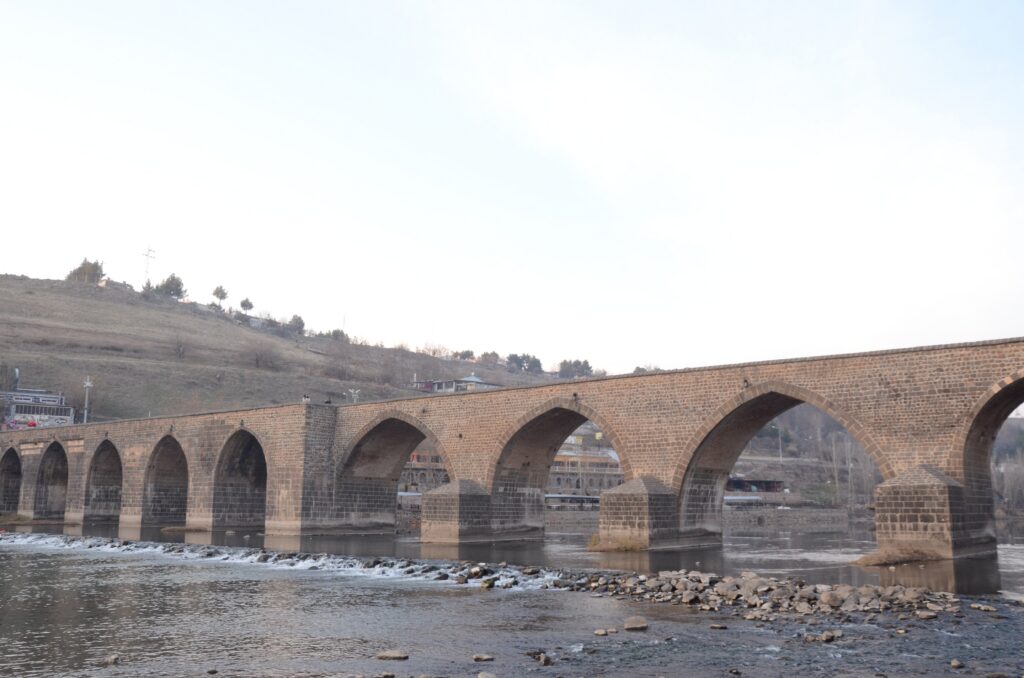
Such inherited prejudices represent a significant obstacle to shared prosperity in an era when both nations would benefit enormously from closer cooperation. Fortunately, a new generation of historians and scholars is emerging, committed to presenting a more nuanced and complete picture of our shared past—one that acknowledges not only conflict but also centuries of coexistence, vibrant trade relations, diplomatic exchanges, and rich cultural borrowings that flowed in both directions. Their work reveals that our histories are intertwined in far more complex and often surprisingly cooperative ways than traditional narratives suggest. Below you will find the publications that explore these themes of mutual coexistence and intercultural exchange:
General Ottoman-European Relations and Cultural Exchange
Ben-Zaken, A. (2010). Cross-Cultural Scientific Exchanges in the Eastern Mediterranean, 1560–1660. Johns Hopkins University Press.
İnalcık, H. (2006). The Ottoman Empire and Europe: The Ottoman Empire and Its Place in European History. Kronik Kitap.
Morrison, R. G. (2025). Merchants of Knowledge: Intellectual Exchange in the Ottoman Empire and Renaissance Europe. Stanford University Press.
Habsburg-Ottoman Relations
Bartov, O., & Weitz, E. D. (Eds.). (2013). Shatterzone of Empires: Coexistence and Violence in the German, Habsburg, Russian, and Ottoman Borderlands. Indiana University Press.
Hüttler, M., & Weidinger, H. E. (Eds.). (2014). Culture and Diplomacy: Ambassadors as Cultural Actors in Ottoman-European Relations from the 16th to the 19th Century, Volume I. Hollitzer Verlag.
Ottoman-Venetian Relations
Carboni, S. (Ed.). (2018). Venice and the Ottoman Empire: A Tale of Art, Culture, and Exchange. Rizzoli.
Dursteler, E. R. (2006). Commerce and Coexistence: Venetian and Ottoman Merchants in the Early Modern Era. Turcica, 38, 73–96.
Ortega, S. (2014). Negotiating Transcultural Relations in the Early Modern Mediterranean: Ottoman-Venetian Encounters. Routledge.
Pedani, M. P. (2018). A Culture of Trust: Ottoman Merchants and Venetian Notaries in the Early Modern Period. In A. Ferrara & A. Ferrara (Eds.), Venetians and Ottomans in the Early Modern Age: Essays on Economic and Social Connected History (pp. 31–47). Edizioni Ca’ Foscari.
Franco-Ottoman Relations
Garnier, É. (2008). L’Alliance Impie: François Ier et Soliman Le Magnifique Contre Charles Quint (1529–1547). Éditions du Félin.
Isom-Verhaaren, C. (2011). Allies with the Infidel: The Ottoman and French Alliance in the Sixteenth Century. I.B. Tauris.
Commerce Relations
Mills, S. (2020). A Commerce of Knowledge: Trade, Religion, and Scholarship between England and the Ottoman Empire, 1600–1760. Oxford University Press.
Skilliter, S. A. (1977). William Harborne and the Trade with Turkey, 1578–1582: A Documentary Study of the First Anglo-Ottoman Relations. Oxford University Press.
Talbot, M. (2017). British-Ottoman Relations, 1661–1807: Commerce and Diplomatic Practice in Eighteenth-Century Istanbul. Boydell Press.
Wood, A. C. (1935). A History of the Levant Company. Oxford University Press.
Ottoman-Hungarian Relations and Border Studies
Bilge, S. M. (2010). Osmanlı’nın Macaristanı. Kitabevi Yayınları.
Çalışır, M. F. (2009). War and Peace in the Frontier: Ottoman Rule in the Uyvar Province, 1663–1685 [Master’s thesis, Bilkent University].
Celnar, M. (2021). Hranice a pohraničie v kontexte osmansko-uhorských vojen 16. a 17. storočia. In Hranice v priestore a čase: Stretnutie mladých historikov X. Zborník príspevkov z vedeckej konferencie mladých historikov (pp. 25–33). Univerzita Pavla Jozefa Šafárika v Košiciach.
Celnar, M. (2022). Listy osmanských hodnostárov adresované Mikulášovi Pálffymu 1588–1594. Historický časopis, 70(2), 193–216.
Lengyelová, T., & Várkonyi, G. (2009). Báthory: Život a smrt (pp. 24–45). Ottovo nakladatelství.
Markusková. (2013). Život na uhorsko-osmanskom pohraničí v rokoch 1596–1687 na príklade Gemerskej stolice. Acta Historica Neosoliensia, 16(1–2), 224–274.
Pálffy, G. (2021). Hungary between Two Empires 1526–1711. Indiana University Press.
Sudár. (2008). Iszkender pasa és Bethlen Gábor Habsburg ellenes hadjáratai. In Šutaj (Ed.), Protihabsburské stavovské povstania a ich vplyv na vývoj pohraničných regiónov Slovenska a Maďarska v 17. storočí (pp. 80–92). Prešov.
Varkónyi. (2003). Pálffy István érsekújvári főkapitány és a váci Musta basa levelezése. In Fundárková & Pálffy (Eds.), Pálfiovci v novoveku: Vzostup významného uhorského šľachtického rodu. Zborník z vedeckej konferencie (pp. 63–73). Bratislava; Budapest.Various Topics
Other Studies
Aytekin, E. A. (2022). Beyond conflict and coexistence: Cosmopolitanism and inter-communal relations in late Ottoman cities. Southeast European and Black Sea Studies, 22(4), 533–553. https://doi.org/10.1080/14683857.2022.2051123
Fraser, E. A. (2017). Mediterranean Encounters: Artists Between Europe and the Ottoman Empire, 1774–1839. Penn State University Press
Zandi-Sayek, S. (2012). Ottoman Izmir: The Rise of a Cosmopolitan Port, 1840–1880. University of Minnesota Press.
Arcak Casale, S. (2016). Gifts in Motion: Ottoman-Safavid Cultural Exchange, 1501–1618 [Doctoral dissertation, University of Minnesota].
de Groot, A. H. (1978). The Ottoman Empire and the Dutch Republic: A History of the Earliest Diplomatic Relations, 1610–1630. Brill.
Gürpınar, D. (2013). Ottoman Imperial Diplomacy: A Political, Social and Cultural History. I.B. Tauris.
van Gelder, M., & Krstić, T. (Eds.). (2015). Cross-Confessional Diplomacy and Diplomatic Intermediaries in the Early Modern Mediterranean [Special issue]. Journal of Early Modern History, 19(2–3), 93–259.
Eldem, E., Goffman, D., & Masters, B. (1999). The Ottoman City between East and West: Aleppo, Izmir, and Istanbul. Cambridge University Press.
Heppner, H., & Ferro, M. (Eds.). (2019). Europe and the Black Sea Region: A History of Early Knowledge Exchange (1750–1850). LIT Verlag.